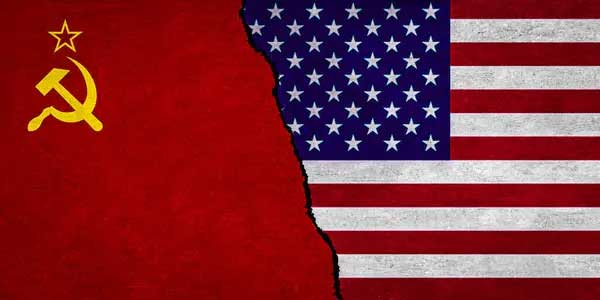

The Cold War, spanning roughly from the end of World War II in 1945 to the dissolution of the Soviet Union in 1991, was not just a geopolitical standoff between the United States and the USSR. It was a complex and multifaceted conflict that profoundly influenced global dynamics and shaped numerous wars and uprisings around the world. The rivalry between these superpowers established a framework for regional conflicts, defined international relationships, and led to an arms race that threatened human civilization itself. Understanding how the Cold War shaped 20th-century conflicts provides crucial insights into the geopolitical landscape we navigate today.
The Cold War: A Catalyst for Global Conflict Escalation
The Cold War was characterized by a pervasive atmosphere of tension and suspicion that extended beyond the borders of the superpowers. Many nations found themselves caught between the competing spheres of influence, forced to align with either the capitalist West or the communist East. This created an environment ripe for conflict, as nations sought to assert their independence while navigating the pressures of the global superpower dynamic. The ideological divide prompted not only military engagements but also economic and cultural confrontations.
Moreover, the Cold War fueled a series of regional conflicts that often escalated into larger confrontations. In places like Korea and Vietnam, the friction between the superpowers manifested in direct military intervention, resulting in devastating outcomes. These conflicts were not isolated incidents; they served as microcosms of the broader ideological battle, often leading to protracted warfare that claimed millions of lives. The urgency of military build-up and intervention reflected how the Cold War was a catalyst for a range of conflicts that shaped nations and regions.
The impact of the Cold War was felt across Africa, Asia, and Latin America, where colonial legacies and emerging national movements collided with superpower ambitions. Countries like Angola and the Democratic Republic of the Congo became battlegrounds for ideological disputes, resulting in civil wars that were exacerbated by foreign interventions. The global struggle between communism and capitalism thus influenced not only great power relations but also local dynamics that often spiraled into prolonged crises.
As superpowers vied for global dominance, the Cold War also fostered a culture of militarization in many nations. Governments often increased their military budgets, fueled by the belief that security could only be assured through the acquisition of advanced weaponry and alliances. This militarization often stifled social progress, as resources that could have been allocated to education and health were diverted to military expenditures.
In this context, the Cold War served as a catalyst for a multitude of conflicts that were often mischaracterized as purely regional issues or civil wars. Instead, they were deeply intertwined with the larger ideological struggle, illustrating how the global tension directly impacted local realities. The ramifications of this entanglement continue to resonate, as the echoes of Cold War conflicts can still be heard in ongoing disputes and tensions around the world.
Hence, the Cold War was not a mere historical backdrop but a significant factor that shaped numerous 20th-century conflicts. Its legacy is evident in the enduring complexities of modern geopolitics, where the line between global and local remains blurred.
Ideological Battles: Capitalism vs. Communism in Warfare
At the heart of the Cold War was a fundamental ideological divide: capitalism, championed by the United States, versus communism, represented by the Soviet Union. This binary opposition became the foundation for military strategies and engagements, influencing the behavior of states in conflict situations. The ideological battle was not merely philosophical; it often had tangible consequences on the ground, leading to wars that were framed in terms of their ideological significance.
In many conflicts, particularly in the developing world, the choice between these two ideologies became a rallying point for various groups. For instance, the Vietnam War was often portrayed as a struggle against imperialist forces, with the North Vietnamese framing their fight as one for liberation from Western oppression. This ideological lens attracted not only local support but also international sympathy, as many viewed the conflict through the prism of anti-colonialism.
The ideological battles also led to the establishment of doctrines and strategies that aimed to contain or expand influence. The U.S. adopted the policy of containment to prevent the spread of communism, which justified interventions in various countries. The Domino Theory, suggesting that the fall of one state to communism would lead to a chain reaction, further fueled military engagements in regions like Southeast Asia. This notion, while often overstated, shaped strategic decisions and justified extensive military involvement.
Conversely, the Soviet Union sought to promote communism as part of its global mission, providing support to revolutionary movements and leftist governments worldwide. This ideological commitment often found expression in military assistance, arms supplies, and even direct intervention, as evidenced in Afghanistan during the late 1970s and 1980s. The ideological fervor drove both superpowers to engage in conflicts that extended their influence, often resulting in devastating consequences for the local populations.
The ideological framing of these conflicts also influenced the narratives surrounding them, shaping public perception and political discourse. Leaders in both blocs utilized these ideological battles to bolster their domestic legitimacy, portraying themselves as champions of their respective causes. This approach often obscured the complexities of local grievances and motivations, reducing multifaceted conflicts to simplistic ideological dichotomies.
Ultimately, the ideological battles of the Cold War not only defined military confrontations but also shaped the very nature of warfare itself. They established a legacy of conflict that continues to inform contemporary geopolitical struggles, where ideological divisions still play a significant role in shaping alliances and enmities.
Proxy Wars: How Superpowers Influenced Local Conflicts
One of the most profound manifestations of the Cold War was the emergence of proxy wars, where the two superpowers engaged in indirect confrontations through local conflicts. Rather than engaging in direct military confrontation, the U.S. and the USSR fought for influence by backing rival factions, governments, and movements in various regions. This strategy allowed them to extend their reach while avoiding the potential catastrophe of a direct conflict.
In Latin America, for example, the U.S. supported anti-communist regimes and insurgencies, often using military aid and covert operations to influence outcomes. The Cuban Revolution, which brought Fidel Castro to power, alarmed the U.S. and set the stage for direct interventions and support for counter-revolutionaries throughout the region. The failed Bay of Pigs invasion in 1961 exemplified the extent to which the U.S. was willing to go to counter perceived communist threats in its backyard.
Similarly, in Africa, the Cold War bred a series of proxy conflicts as the superpowers sought to gain influence over newly independent states. The U.S. and the USSR supported various factions in civil wars, such as in Angola and Ethiopia, where the ideological allegiances were often less about local issues and more about aligning with global power dynamics. These interventions exacerbated existing tensions and contributed to prolonged violence, highlighting how the Cold War expanded the scope of local conflicts.
The Middle East also became a theatre for proxy wars, where superpower rivalries played out through support for opposing sides in conflicts such as the Arab-Israeli wars. The U.S. provided military and economic support to Israel, while the USSR offered assistance to Arab states, creating a cycle of conflict that was often exacerbated by external involvement. These proxy wars had lasting implications for regional stability, many of which continue to reverberate today.
Proxy wars were often characterized by a lack of direct accountability, as local actors became the primary agents of violence while superpowers provided the necessary resources and legitimacy. This dynamic not only complicated conflict resolution but also contributed to the suffering of civilian populations caught in the crossfire. The pursuit of ideological goals often overshadowed humanitarian concerns, leading to significant loss of life and widespread destruction.
In summary, the Cold War’s legacy of proxy wars illustrates how superpowers shaped local conflicts in pursuit of their strategic interests. The geopolitical chess match not only altered the course of nations but also created a cycle of violence that has had lasting repercussions on global stability and governance.
Nuclear Arms Race: The Threat of Total Annihilation
The Cold War was marked by an unprecedented nuclear arms race, fundamentally altering the nature of warfare and international relations. As the U.S. and the USSR amassed vast arsenals of nuclear weapons, the potential for total annihilation loomed large, creating a paradox where the threat of mutual destruction acted as a deterrent to direct confrontation. This delicate balance of terror became a defining characteristic of the Cold War era.
The development of nuclear weapons shifted the calculus of warfare, rendering traditional military confrontations less viable. The doctrine of Mutually Assured Destruction (MAD) posited that any nuclear attack would lead to a devastating retaliatory strike, thus discouraging both superpowers from entering into open conflict. However, this precarious balance also led to heightened tensions and an atmosphere of fear, as any miscalculation could result in catastrophic consequences.
The arms race itself was driven by a relentless quest for superiority. Both superpowers aimed to outdo each other in terms of nuclear capabilities, leading to the stockpiling of thousands of warheads. The Cuban Missile Crisis of 1962 epitomized the terrifying reality of nuclear brinkmanship, where the world stood on the edge of nuclear war due to a series of miscommunications and military posturing. This crisis highlighted the danger of escalation in the context of nuclear capabilities, forcing a reevaluation of strategies.
The sheer destructive power of nuclear weapons also had profound implications for the conduct of warfare. Conventional conflicts became increasingly overshadowed by the specter of nuclear engagement, leading to a reluctance to escalate disputes into full-scale wars. As a result, conflicts such as Vietnam and Korea were often fought with conventional forces, even as nuclear capabilities loomed in the background, influencing decisions and strategies.
International responses to the nuclear threat led to a series of treaties aimed at arms control, including the Nuclear Non-Proliferation Treaty (NPT) of 1968, which sought to prevent the spread of nuclear weapons and promote peaceful uses of nuclear energy. While these agreements represented a step toward mitigating the nuclear threat, they also underscored the challenges